FORTIFIED Roof
What a FORTIFIED roof is, and what it requires
A FORTIFIED roof is a roof built to the IBHS FORTIFIED Roof standard: a sealed roof deck, enhanced ring-shank nailing, reinforced edges, and wind-rated covering, installed by a certified contractor and documented by an independent evaluator before IBHS issues a 5-year certificate. FORTIFIED Roof is the baseline of the 3 levels.
What are the FORTIFIED roof requirements?
FORTIFIED is a construction standard from the Insurance Institute for Business and Home Safety, built on decades of research into how roofs actually fail in high wind. It targets the parts that let go first in a storm: the deck, its attachment, the edges, and the covering. A certified FORTIFIED roofing contractor does the work.
- A sealed roof deck.
- Enhanced deck attachment using ring-shank (enhanced) nailing.
- Enhanced edge detailing, including a drip edge.
- Wind-rated shingles.
- Installation by a certified FORTIFIED Roofing contractor.
Impact-rated shingles are commonly installed but are not strictly required at the base Roof level in every case. Shingles must meet the required wind ratings.
Those requirements are normally met during a re-roof, while the deck is open and every one of them can be installed and photographed. That is not the only way to meet them. If your covering is still in good condition, IBHS allows the deck to be sealed and re-attached from inside the attic, so a sound roof can earn the designation without being replaced.
FORTIFIED Roof, Silver, and Gold requirements
The 3 levels are cumulative, not alternatives. Every designated home meets Roof first, Silver builds on Roof, and Gold builds on Silver. A roof-only job therefore earns FORTIFIED Roof, and it is the level the Louisiana Fortify Homes grant is designed to fund, so that is where a grant-funded project lands.
- FORTIFIED RoofBaseline
- The baseline level. Every FORTIFIED property meets it first.
- FORTIFIED Silver
- Adds protection for openings such as windows, doors, and attached structures.
- FORTIFIED Gold
- Adds continuous load-path connections that tie the roof to the walls and foundation.
Silver is about the openings, so it means work on windows, doors, and anything attached to the house. Gold is the whole-house level, and the continuous load path it asks for reaches well past the roofline, down through the walls to the foundation. Which pieces your particular house already has is a question for a certified evaluator, not a brochure.
The levels are also worth different amounts. In the South zone, where most of this state's storm risk sits, the Regulation 136 benchmark on the wind or hurricane portion of premium runs 29 percent for Roof, 43 percent for Silver, and 49 percent for Gold. The full table, by zone, is on the insurance savings page.
Does a FORTIFIED roof have to be metal, and what does it look like?
No, it does not have to be metal. The standard is about what the covering has to do rather than what it has to be made of, and asphalt shingles are the usual choice on a Louisiana retrofit as long as they carry the required wind ratings. Metal is not ruled out either. What no covering can do is earn the designation on its own, because the rating on the shingle or the panel is one requirement out of several. Your evaluator can tell you what the covering you want would need.
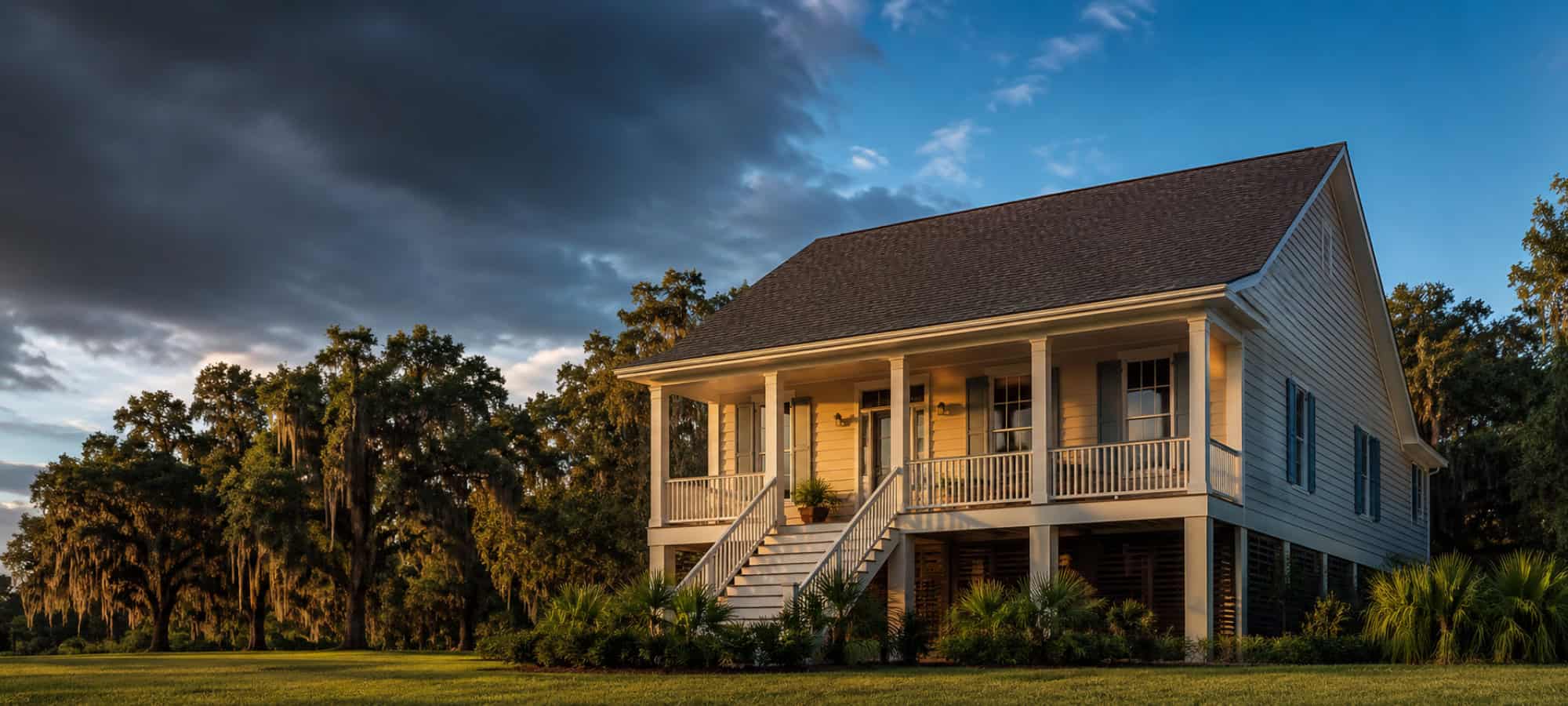
From the street, a finished FORTIFIED roof looks like a good new roof, and that is the honest answer to what one looks like. The parts that earn the designation are covered up by the time the job is done: the sealed deck, the ring-shank nails holding it to the framing, and the metal at the edges all go in before the covering does. That is why the evaluator photographs the work in progress, and why the IBHS certificate rather than the curb view is what proves a roof is FORTIFIED.
How a roof earns the FORTIFIED certificate
An independent third-party FORTIFIED Evaluator collects photos and documentation and submits them to IBHS. Once IBHS confirms compliance, it issues a designation certificate that is good for 5 years. The designation is issued to the home, not the owner, so it transfers with the property when the home is sold. To keep it in force, the home must pass a redesignation inspection by a certified FORTIFIED evaluator at the end of each 5-year term.
The evaluator who certifies the roof is independent of the contractor on purpose. That separation is what makes the designation credible to insurers, and it is why the paperwork and photos matter as much as the roofing itself.
What a FORTIFIED designation gets you in Louisiana
A FORTIFIED Roof is not only sturdier in a storm. In Louisiana it also opens the door to a mandated wind insurance discount and to a state tax credit for the work, both of which can offset the cost over time. Those apply whether you win a grant or pay for the roof yourself, and in every parish in the state.
By Louisiana Fortified HomesUpdated
Ready to build to the standard?
Get connected with a FORTIFIED-certified roofer in your parish and see what the upgrade would take on your home. No cost, no obligation.
Or call now and talk to a roofer: (504) 520-4274